
Crawl space encapsulation in Charlotte costs $4,200–$13,500 — the North Carolina band (CrawlSpaceCosts 2026). NC research measured vented Piedmont crawls exceeding 80% RH much of spring and summer while closed crawls held under 65%; over Cecil red clay and ~44 inches of yearly rain, the sealed design is the validated answer.
The symptoms upstairs, why the crawl capital earned its title, and the research-backed fix by stage.
What your floors already know
- Musty air that strengthens May through September — the crawl exporting its season upstairs
- Cupping hardwoods and soft spots over the dampest bays
- Insulation hanging or fallen below — saturated batts letting go
- An AC that runs long and loses anyway — it's drying your crawl through the subfloor
- Allergies that ease anywhere else — the crawl is the intake
- Camel crickets and moisture bugs — humidity's reliable audience
Two or more usually means the crawl. The inspection is free and photographed — Charlotte homeowners get to see under their own house before anyone talks price.
How the crawl capital earned the title
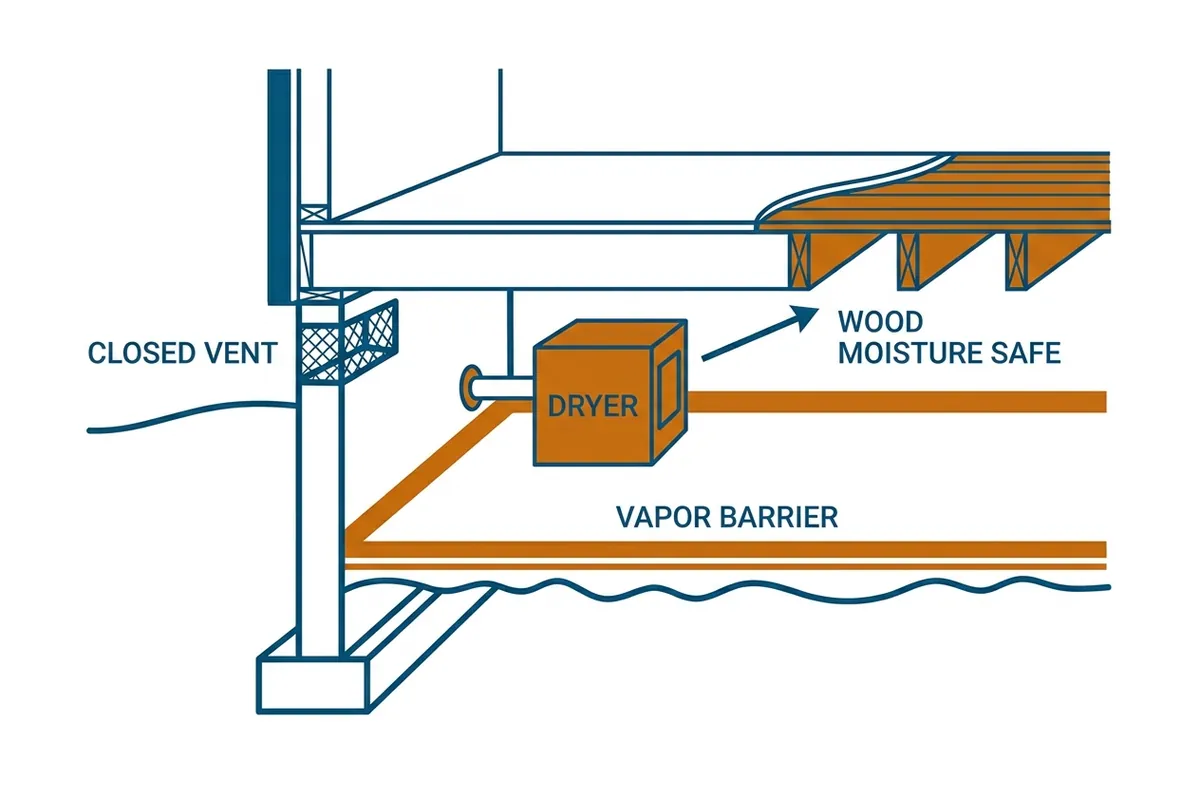
Three facts stack up under this metro. Stock: North Carolina builds on crawls more than any state — block foundations with vented crawls dominate from 1950s brick ranches through 2000s subdivisions. Soil: the Piedmont's Cecil-series red clay — NC's official state soil — expands wet, shrinks dry, and traps rain against foundations for days, exhaling vapor upward between storms. Climate: summers running 70–90% humidity feed vented crawls continuously, and the state's own research measured the result: above 80% RH in vented crawls for whole seasons. Wood past 70% feeds rot and termites; Charlotte's vented stock lives past it all summer.
The same state answered the question: closed-crawl studies showed sealed spaces holding dramatically drier in identical conditions, and NC's code adoption of IRC R408.3 made the sealed design standard practice. This is the one home-improvement category where the Carolinas wrote the national playbook — we just install it properly.
The validated fix, by stage
| Stage | Includes | Range |
|---|---|---|
| Vapor barrier | Class I ground seal, wrapped piers, taped seams | $1,500–$4,000 |
| Water management | Drainage + sump for clay-held storm water | $2,000–$5,000 |
| Full encapsulation | Seal + closed vents + sized mechanical drying | $4,200–$13,500 |
| Structural repair | Framing the 80% seasons softened | Per written scope |
Growth on framing gets treated before sealing, drying holds the finished number, and commissioning readings document the drop — the same instrument standard the research set.
Brick-ranch country, served accordingly
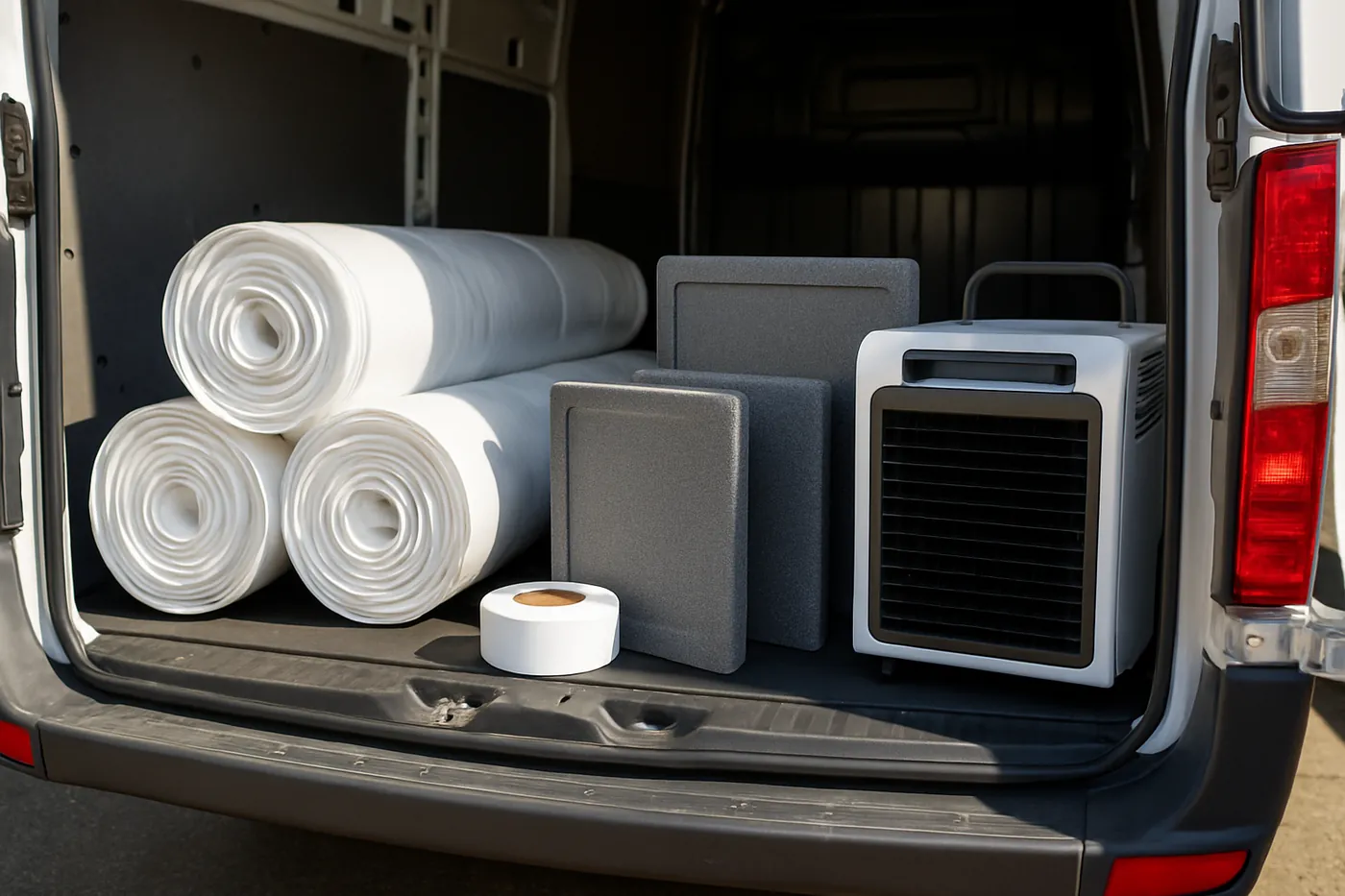
Charlotte's signature stock — the brick ranch on a block crawl — is also the design's best customer: solid framing that repairs cleanly, accessible crawls that seal efficiently, and immediate upstairs payoff when the crawl dries. From Myers Park-adjacent 1950s streets to Union County's 2000s subdivisions, the metro's houses were built for this retrofit before anyone knew they'd need it.
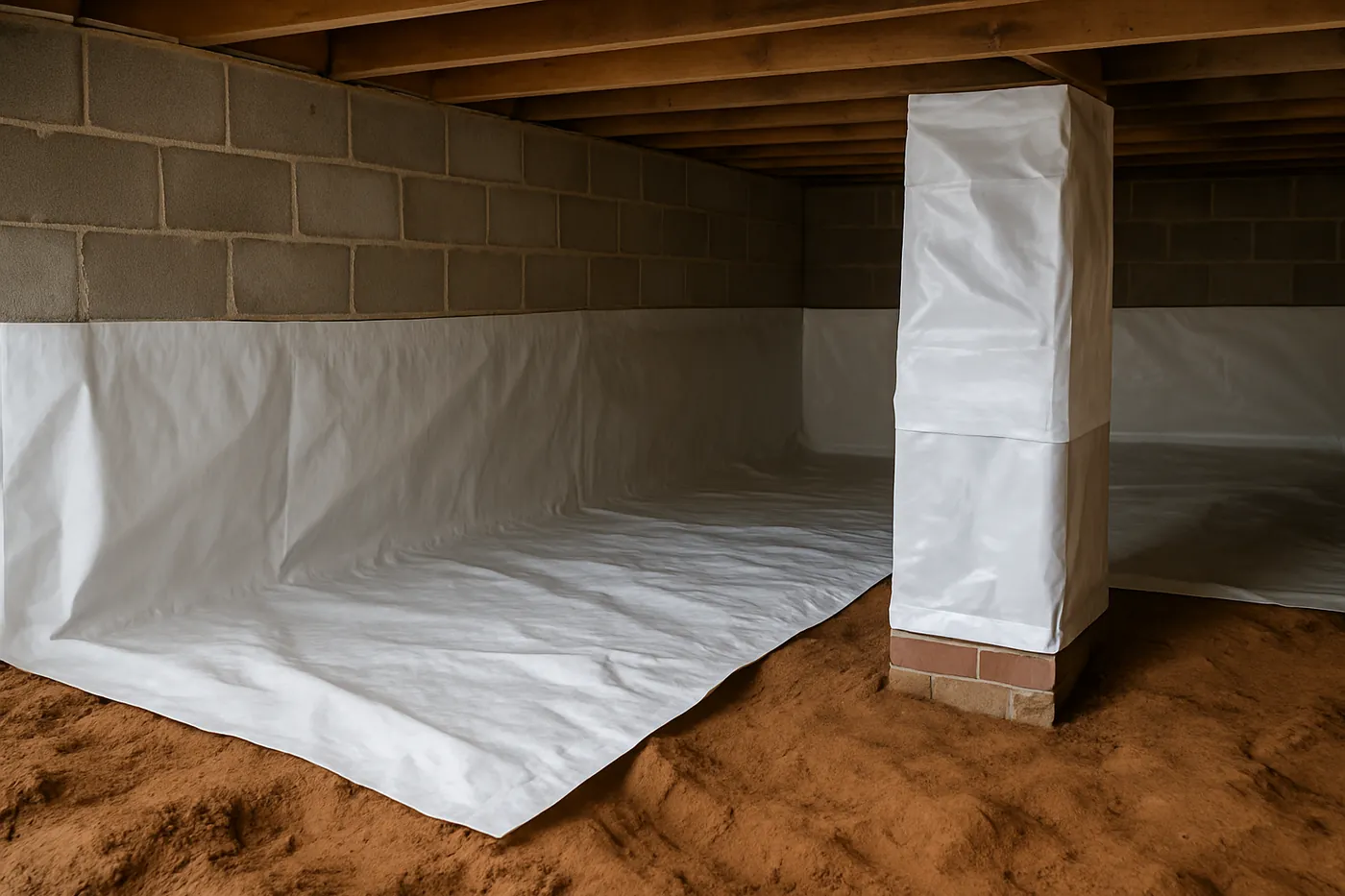
Two jobs get their own deep pages: what separates a real vapor barrier installation from a $500 liner, and how sagging floors over a humid crawl get measured and fixed.
Crawl space questions Charlotte homeowners ask
How much does crawl space encapsulation cost in Charlotte?
North Carolina encapsulations run $4,200-$13,500 (CrawlSpaceCosts' 2026 NC guide), and Charlotte tracks the state band — positioned by square footage, water management, and framing condition. Vapor barriers alone run $1,500-$4,000. Every quote follows a free photographed inspection with readings. Our Crawl space encapsulation cost breakdown for Charlotte shows what drives each figure, line by line.
Why does North Carolina have so many crawl space problems?
Scale plus soil plus climate: NC is the country's largest crawl space market — vented block-foundation crawls dominate the housing stock — sitting on Piedmont red clay that traps moisture year-round, under summers that run 70-90% humidity. The state basically invented the modern crawl problem, which is also why it pioneered the closed-crawl research that solves it.
What did the NC research actually find?
The state's closed-crawl studies measured what owners suspected: vented Piedmont crawls exceeded 80% relative humidity through much of spring and summer, while closed (sealed) crawls in the same study held under 65% — before mechanical drying tightens that further. It's the clearest before-and-after data in the industry, gathered on exactly our soil and climate.
What's special about the red clay here?
It's Cecil series — literally North Carolina's official state soil — and it behaves like Piedmont clay everywhere: expands wet, shrinks dry, drains slowly, and holds rain against footings for days after storms. Charlotte's ~44 inches of yearly rain keeps the cycle loaded, and ground vapor rises off it continuously.
Is a sealed crawl space code-approved in North Carolina?
Fully — NC's adoption of the IRC's unvented provisions (R408.3) permits sealed crawls with a Class I vapor barrier and mechanical drying, and the state's own research program is why the design went mainstream nationally. Sealed-and-dried is the home-state answer.
My brick ranch has vents all around. Is that the problem?
It's the design era talking — Charlotte's huge stock of 1950s-80s brick ranches on block crawls was built when venting was the theory. The theory lost to the data: those vents import humid air that condenses below your floors all summer. Closing them, properly, is the fix the research validated.
How long does the work take?
Vapor barriers a day; drainage one to two; full encapsulation two to four days; structural repairs extend per scope. Your written quote states the timeline, and the house stays livable throughout.
Which areas do you cover?
The metro's south and west arcs plus the north: Charlotte, Matthews, Mint Hill, Pineville, Indian Trail, Stallings, Belmont, Mount Holly, Gastonia, and Huntersville — each community with its own page and its own ground story.
Crawl space work across the metro
Belmont · Gastonia · Huntersville · Indian Trail · Matthews · Mint Hill · Mount Holly · Pineville · Stallings · all service areas
Get a free Charlotte crawl space inspection
Tell us what you're noticing — smells, humidity, floor bounce, a wet crawl — and we'll schedule an inspection with photos of what we find. We reply the same business day.